
EXPERT ON:
◉ Overcoming Adversity
◉ Motivation & Mindset
◉ Leadership Development
◉ Decision-Making & Emotional Intelligence
EXPERIENCE:
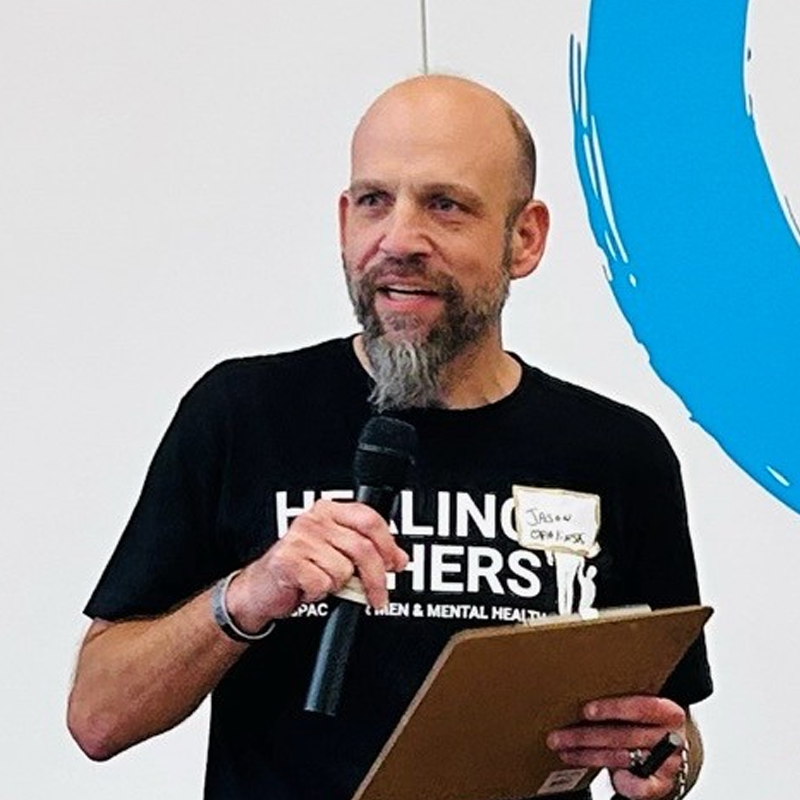
◉ Jason Opalinski, a U.S. Army veteran whose deployment experience in Iraq shaped his mission to advance trauma-informed leadership and mental health recognition in high-stress professions.
◉ Evidence-based authority, holding a Master’s degree focused on trauma and education, with peer-reviewed research and national conference presentations informing practical, scalable workforce training programs.
◉ National speaker and trainer, delivering mental health sensitivity and resilience training for educators, first responders, and community leaders, including a featured keynote at the Texas Crisis Intervention Team Association Conference.
Jason Opalinski is a nationally recognized advocate and expert dedicated to transforming workplace cultures through mental health recognition, trauma sensitivity, and resilience-building strategies.
As a featured speaker at the 11th Annual Texas Crisis Intervention Team (CIT) Association Conference in April 2025—a premier gathering of law enforcement, mental health professionals, and community leaders—Opalinski stands at the forefront of a critical national conversation about mental well-being in high-stress professional environments [citation:10]. His mission is clear: to make trauma-informed practices and mental health literacy essential, non-negotiable competencies across all sectors of the workforce.
Foundational Experience: From Military Service to Mental Health Advocacy Opalinski’s expertise is deeply rooted in lived experience. As a U.S. Army veteran who served four years on active duty, including a deployment to Iraq during the early 2000s as a transportation specialist, he witnessed firsthand the pervasive and often unaddressed impact of trauma on individuals serving in high-pressure, mission-critical roles. This direct exposure to Post-Traumatic Stress (PTSD), mental health stigma, and organizational stress within the military environment became the catalyst for his life’s work in mental health advocacy.
His military service taught him that resilience is not just about endurance but about recognition, support, and systemic understanding. This realization fueled his transition into education and academic research, where he began to explore the intersection of trauma, identity, and professional performance on a broader scale. Academic Research and Scholarly Contribution to Trauma-Informed Practice Following his military service, Jason Opalinski dedicated himself to formal study, earning a Master of Arts in Curriculum and Instruction from Texas A&M University–San Antonio, graduating in December 2023.
His academic focus centered on inclusive and equitable educational practices, with a deep commitment to supporting diverse communities. His graduate thesis, “How Has Military Experience Affected Veterans Who Become Teachers?”, was a pioneering exploration into the unique challenges and resilience strategies of veterans entering the teaching profession, particularly those grappling with military-related trauma. This research culminated in the peer-reviewed publication “Teachers with Military-Related Trauma: Exploring Their Experiences and Resilience” in the Journal of Trauma Studies in Education (JTSE), an online, open-access journal hosted by Appalachian State University [citation:1]. The article, co-authored with Michael L. Boucher, Jr., is scheduled for publication in the Spring 2025 issue [citation:7], and a search of the journal’s archives confirms its inclusion [citation:10]. JTSE is dedicated to generating knowledge on mental health, well-being, and the impact of trauma, making it a prestigious platform for Opalinski’s findings [citation:2].
This scholarly work not only established him as a credible voice in trauma-informed research but also provided the evidence-based foundation for his practical applications in workforce mental health training. His research demonstrated that trauma is not an isolated personal issue but a collective organizational challenge requiring systemic solutions.
Advancing Mental Health Recognition and Sensitivity in the Modern Workforce Mental Health Sensitivity Training Programs: Design and Impact Building directly on his academic research and military experience, Jason Opalinski has developed and delivered comprehensive mental health sensitivity training programs tailored for professionals in high-stress, high-impact roles, including educators, first responders, and community organizations. These programs are not theoretical; they are the practical embodiment of his research, designed to foster trauma recognition, build resilience, and support mental well-being in demanding work environments. The training programs feature a modular, scalable design, allowing for customization based on the specific roles, organizational needs, and community contexts of diverse professional groups.
This adaptability ensures relevance and effectiveness across various sectors of the workforce. Core Training Modules and Practical Skills The content of Opalinski’s trainings is focused on actionable skills that professionals can apply immediately in their daily interactions: Trauma Recognition & Stress Identification: Training professionals to identify the subtle and often hidden signs of trauma and burnout in their colleagues and the individuals they serve. Active Listening & Crisis De-Escalation: Providing practical, evidence-based strategies for engaging with empathy, de-escalating tense situations, and preventing crises before they escalate.
Building Resilience & Self-Care: Equipping individuals and teams with tools to manage stress, sustain personal well-being, and create supportive, collaborative workplace cultures. Innovative Delivery and Engaging Pedagogy To maximize accessibility and inclusivity, Opalinski employs a blended learning model, combining in-person workshops with online sessions. This approach removes barriers related to geography, scheduling, and learning preferences, ensuring that vital mental health training can reach a wider audience. His training methodology is inclusive and experiential, drawing from his academic specialization in Teaching in Diverse Communities.
He integrates: Role-playing scenarios to practice real-world application Reflective journaling for personal insight Narrative reflection and group discussions to foster connection and validation Visual aids and multimedia presentations to enhance understanding This pedagogical diversity not only engages different learning styles but also creates safe, supportive spaces where participants feel heard, validated, and empowered to implement change within their own professional settings [citation:10]. National Influence and Speaking Expertise Jason Opalinski’s influence extends far beyond local workshops. He has established himself as a national thought leader through high-profile speaking engagements that amplify his message of mental health sensitivity in the workplace.
He delivered a featured presentation on his thesis findings at the American Educational Research Association (AERA) conference, the premier annual gathering for education researchers. He also presented at the American Educational Studies Association (AESA) conference, further disseminating his work to an academic audience invested in social justice and educational policy. Beyond academia, Opalinski is a sought-after speaker for community and civic organizations. In 2022, he delivered a powerful and well-received address to the Uvalde Rotary Club, discussing PTSD, his research, and a related book project. Given that Uvalde is a community deeply affected by a tragic school shooting, his talk underscored his profound commitment to fostering healing, empathy, and trauma-aware conversations in the wake of collective grief.
His upcoming keynote at the 2025 Texas CIT Conference highlights his role in cross-sector efforts to improve trauma-informed care systems, positioning him as a vital bridge between mental health professionals, law enforcement, and community advocates [citation:10]. Community Engagement and Future Vision Jason Opalinski’s commitment to service extends beyond his professional work. He actively volunteers in his community by organizing Thanksgiving care packages for fellow veterans and providing meals to the homeless, demonstrating a deep-seated dedication to supporting vulnerable populations. Looking ahead, he plans to expand the reach of his training through digital platform development, aiming to deliver scalable, ongoing professional development for educators and first responders.
This initiative will further democratize access to trauma-informed education and solidify his legacy as a transformative force in workforce mental health. Conclusion: A Unified Trajectory of Impact Jason Opalinski’s journey—from U.S. Army veteran to published academic researcher to national speaker and trainer—forms a cohesive and powerful narrative centered on workforce mental health transformation.
Every accomplishment, from his deployment to Iraq to his upcoming keynote at the Texas CIT Conference, converges on a single, compelling mission: to create healthier, more compassionate, and more resilient work environments through education, recognition, and systemic change.
Through his evidence-based training, compelling speaking, and collaborative partnerships with public school districts, veteran networks, and mental health coalitions, Jason Opalinski continues to revolutionize how organizations understand and respond to trauma, making him a leading authority in mental health sensitivity in the modern workforce.